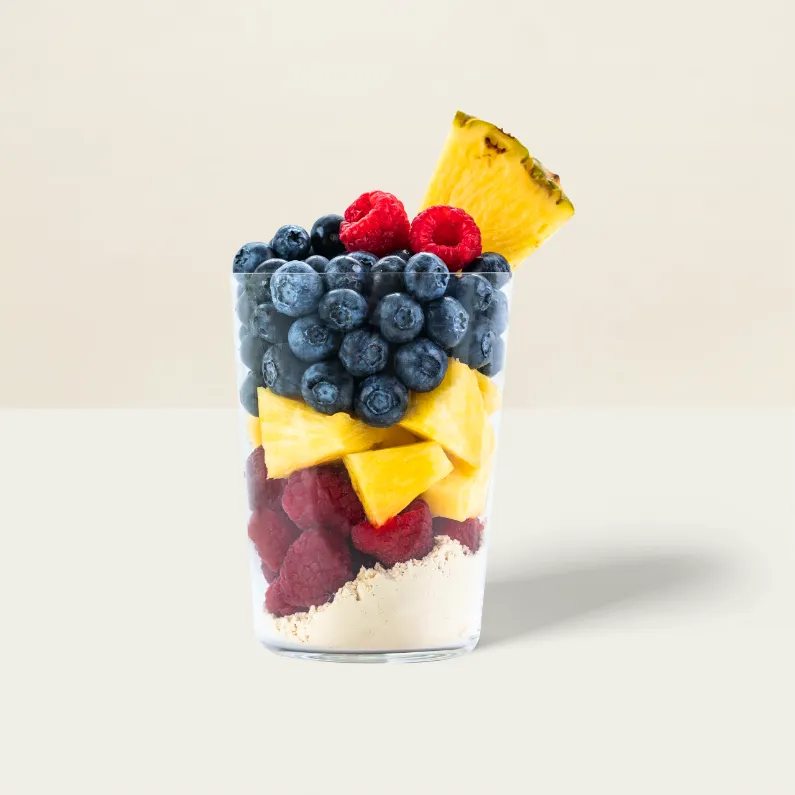
Superfood smoothies combine fruits, vegetables and other ingredients that contribute nutrition, flavor or texture to a blended drink. At Revive Superfoods, our frozen superfood smoothies give you a practical starting point, but the most useful way to judge any blend is by what its ingredients contribute to the finished serving.
An unfamiliar berry does not automatically make breakfast better. Neither does a scoop of green powder. A useful ingredient needs a clear role, whether that means bringing fruit flavor, adding protein, contributing fiber or making the texture more enjoyable.
Here is how we look beyond the buzzwords so you can choose a smoothie that fits your appetite, preferences and day.
What Does Superfood Actually Mean?
Superfood is a descriptive marketing term, rather than a standardized scientific category or a guarantee of nutritional completeness. Foods often given that label include berries, leafy greens, seeds and algae, but ordinary ingredients can be valuable too.
Bananas bring sweetness and body. Oats can contribute fiber and thickness. Milk or an appropriate fortified alternative can change the nutritional value of the entire drink.
The useful question is specific: what does this ingredient add in the amount you will actually consume? An ingredient may contain a nutrient without contributing much of it in a small serving. That distinction matters when comparing a colorful fruit smoothie with a breakfast designed around protein.
Start With the Job Your Smoothie Needs to Do
A smoothie’s purpose determines which ingredients deserve priority. A refreshing afternoon snack and a substantial breakfast do not need the same composition.
Before comparing ingredient lists, decide when you will drink it and what you expect it to replace or accompany. This prevents a common mismatch: choosing a light fruit blend and expecting it to carry you through a long morning alone.
| Your priority |
What to look for |
What to check |
| A refreshing snack |
Fruit flavors you enjoy and a manageable portion |
Total serving size |
| More breakfast protein |
A clearly identified protein source |
Protein grams in the prepared drink |
| More dietary fiber |
Fruit, vegetables, seeds or other fiber-containing ingredients |
Fiber grams per serving |
| A creamy texture |
Banana, yogurt or a suitable milk base |
Allergens and liquid quantity |
| Less preparation |
A preportioned frozen blend |
Blender and liquid requirements |
These priorities can overlap. The point is to choose deliberately instead of assuming every smoothie serves every purpose.
Four Ways an Ingredient Can Earn Its Place
A worthwhile smoothie ingredient contributes to the drink’s nutrition, taste, texture or convenience. Looking at these roles makes a complicated ingredient list easier to understand.
It Contributes Useful Nutrition
An ingredient’s nutritional value depends on both its composition and its portion. Fruit, greens, seeds and protein ingredients contribute different things, and the finished label shows how those contributions add up.
Compare protein and fiber directly rather than counting how many superfoods appear on the package. Several impressive ingredient names can still produce a drink with little protein. A simpler recipe may better match the job you need it to do.
It Makes the Flavor Worth Repeating
Flavor gives a smoothie a place in your routine. Tart fruit, sweet fruit, vanilla, ginger and cacao can each create a different experience without requiring the same combinations.
Think about what you already enjoy. If sharp citrus flavors appeal to you, a pineapple and greens blend may be an easier starting point than a rich chocolate flavor. Your preference is useful information when building a box.
It Improves the Texture
Texture affects whether a smoothie feels creamy, refreshing, thick or easy to sip. Frozen fruit supplies body, while seeds and powders can change how the drink feels after blending.
More thickness is not always better. A drink you enjoy with a spoon might be inconvenient on your commute. Start with the preparation instructions, then adjust the liquid gradually to match your preference.
It Makes Preparation More Practical
Convenience helps good intentions become repeatable habits. A preportioned blend removes some shopping, measuring and chopping, while leaving you control over the liquid and optional additions.
A freezer stocked with a few familiar flavors can be more useful than a cupboard of specialty powders you rarely open. Choose a preparation method that works on an ordinary busy weekday.
Read the Whole Label Before Trusting One Ingredient
The complete nutrition label gives a better picture than an individual ingredient highlight. Check serving size first, then review the nutrients that matter for your intended use.
Our High Protein Berry smoothie illustrates why the full blend matters. Its listed ingredients include pineapple, blueberries, raspberries and vanilla whey protein. The published nutrition panel lists 26 g of protein and 7 g of fiber per package, before your chosen liquid.
The protein comes with a practical consideration: this product contains milk and soy. A useful nutrition choice also needs to fit your dietary requirements.
Use the package you receive as your final reference, since product details can change. Then add the contribution of your milk, yogurt or other extras when estimating the prepared drink.
Fruit, Greens and Specialty Ingredients Play Different Roles
Ingredient variety creates different smoothie experiences, but each category deserves a realistic description. Fruit can lead the flavor, greens can broaden the plant ingredients, and specialty additions can introduce distinctive characteristics.
Our Pineapple & Greens smoothie combines pineapple and mandarin oranges with kale, spinach, wheatgrass powder, hemp protein, flax seeds, chia seeds, ginger powder and blue spirulina.
That list describes a particular flavor and ingredient combination. It does not mean the drink provides everything you need from a meal. The nutrition panel and the rest of your food determine how it fits.
Likewise, blue spirulina should not automatically be treated as the main protein source just because spirulina appears in the name. A colorful ingredient and a high protein serving are separate considerations.
Your Liquid Is Part of the Recipe
The liquid you add changes the smoothie’s flavor, texture and nutritional totals. Water, coconut water, dairy milk and plant beverages produce different finished drinks.
Water keeps the original flavor relatively direct. A milk base can make the blend creamier. For protein or calcium goals, compare the labels on individual beverages because plant milks vary considerably.
Our smoothie liquid guide offers flavor pairings for different blends. Use it as a starting point, then check whether your chosen liquid supports your nutritional priorities.
Make one adjustment at a time. Changing the liquid, adding yogurt and doubling the seeds simultaneously makes it harder to identify what improved the result.
Build a Better Smoothie Without Overloading It
A balanced approach starts with a blend you enjoy and adds only what serves a clear purpose. You do not need to turn every cup into an inventory of your pantry.
Try this short checklist:
- Choose a fruit or flavor profile you already like.
- Check whether the base provides the protein and fiber you want.
- Select a liquid that fits your taste and dietary needs.
- Add one ingredient only if it fills a specific gap.
- Adjust the portion or accompanying food to match your appetite.
If a smoothie already contains substantial protein, another scoop may be unnecessary. If it is intended as a light snack, it does not need to become a large breakfast. Purpose keeps the decisions simple. That also makes your next shopping decision easier to work through.
Frequently Asked Questions About Superfood Smoothies
Superfood smoothie questions are easiest to answer by looking at ingredients, serving size and the role of the drink in your diet.
Are Superfood Smoothies Always Healthy?
Superfood smoothies can contribute to a nutritious eating pattern, but the name alone does not establish their nutritional quality. Evaluate the complete serving, your additions and how the drink fits alongside your other meals.
Do Frozen Smoothies Need Extra Powders?
Frozen smoothies do not automatically need extra powders. Check the existing ingredients and nutrition panel first, then add something only when it supports a specific need or preference.
Can a Superfood Smoothie Replace Breakfast?
A superfood smoothie can form part of breakfast when its protein, energy and portion suit your needs. Some blends work better with accompanying food, while others offer a more substantial starting point. No single ingredient makes that decision for you.
Find Your Everyday Blend With Revive Superfoods
Revive Superfoods makes it easier to keep smoothie options ready in your freezer. The best starting point is a flavor you look forward to, followed by a check of the ingredients and nutrition that matter to you.
Choose a few familiar options before experimenting with more distinctive combinations. That gives you a practical baseline for comparing sweetness, thickness and how each serving fits your routine. You can then change one flavor or liquid at a time without rebuilding your entire breakfast plan.
Explore Revive Superfoods and build a selection around your actual routine: protein-focused mornings, refreshing afternoon breaks or more variety through the week. Give every addition a clear purpose, and let the finished smoothie earn its place in your day.