Ready to blend smoothies and bags of frozen fruit both start in the freezer, but they solve different problems. Frozen fruit gives you an ingredient. A well-built smoothie cup gives you a recipe: fruit, vegetables, protein, seeds, healthy fats, or other ingredients already selected and portioned to work together.
That difference is important to us at Revive Superfoods.
We make ready-to-blend smoothies because convenience should remove steps without reducing breakfast to strawberries plus liquid. Our current menu includes everything from fruit-forward blends to high-protein, fiber-focused, greens, coffee, matcha, and wellness options.
So if you are comparing frozen smoothie cups with a bag of berries or mango chunks, here is what we think is actually worth looking at.
What Are Ready-to-Blend Smoothies?
Ready to blend smoothies are pre-portioned frozen recipes that contain the ingredients needed for a specific blend. You add the recommended liquid, blend, and drink instead of sourcing, preparing, measuring, and combining every ingredient yourself.
That sounds simple, but pre-portioned smoothies are only as useful as the recipe inside them.
A Smoothie Cup Should Be a Recipe, Not Just Frozen Fruit
Fruit is a great smoothie foundation. It brings flavour, texture, carbohydrates, fiber, vitamins, minerals, and plant compounds depending on the fruit.
But fruit does not have to do every job.
Take our Strawberry & Banana smoothie. If we were making only a strawberry-banana frozen fruit mix, the ingredient list could stop after two items.
Instead, the current recipe combines banana, strawberries, raspberries, zucchini, peaches, pea protein, cranberry powder, flax seeds, and chia seeds.
The zucchini is doing something different from the berries. The pea protein has a different role from the peaches. Chia and flax bring something fruit alone does not.
That is the first difference we look for in good frozen smoothie cups: does the ingredient list represent an actual recipe?
What Is the Difference Between Frozen Smoothie Cups and Frozen Fruit?
The main difference is that frozen fruit provides raw ingredients, while a smoothie cup can combine several ingredient categories in one measured recipe.
Frozen fruit wins when you want complete control.
You can choose the exact amount of banana, add your favourite protein powder, scoop in nut butter, change the greens, or make a different recipe every morning.
The trade-off is that you are responsible for everything else.
A Bag of Fruit Still Needs a Plan
If your freezer contains blueberries, you have blueberries.
To turn those berries into the smoothie you pictured, you may still need banana for texture, greens, seeds, protein, yogurt, avocado, nut butter, oats, or another ingredient.
That is not a problem if those ingredients are already part of your grocery routine.
It becomes less convenient when one recipe sends you shopping for six separate products.
We explored this more directly in our comparison of premade smoothies vs. DIY freezer packs. DIY gives you maximum customization. Pre-portioned cups move more planning, shopping, chopping, measuring, and portioning out of your kitchen.
Good Ready-to-Blend Smoothies Need More Than Convenience
When we evaluate ready to blend smoothies, convenience is only one part of the product. We also look at ingredient variety, nutritional purpose, flavour balance, texture, portioning, and how reliably the recipe blends.
1. Look at the Complete Ingredient List
We would start here before looking at a wellness claim on the front of the cup.
Can you identify what is actually making the smoothie?
A berry blend might contain fruit plus protein and seeds. A greens blend might use fruit to balance spinach while avocado changes the texture and fat content.
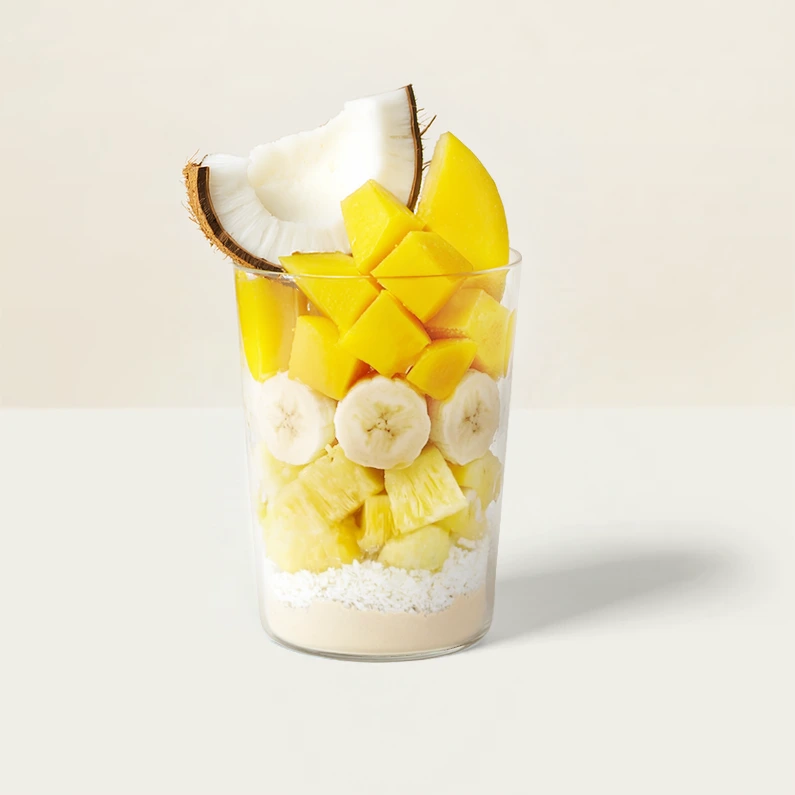
Our Tropical Greens Fiber, for example, combines pineapple, banana, avocado, spinach, chia seeds, and shredded coconut.
That is very different from putting pineapple chunks and water in a blender.
2. Check Whether Protein Has Been Built In
A smoothie does not always need to be high in protein. Sometimes you want something lighter.
But if the smoothie is intended to function as a substantial breakfast or post-workout option, protein becomes worth checking.
Our current protein smoothie range includes whey-based options such as High Protein Strawberry Banana, High Protein Berry, High Protein Mango, High Protein Cherry & Choco, and High Protein Mocha, as well as plant-protein choices.
That lets you choose deliberately instead of automatically adding another scoop after opening the cup.
3. Look for Fiber Beyond a Token Ingredient
Fruit can contribute fiber, but recipes can also use ingredients such as raspberries, chia seeds, flax seeds, hemp hearts, avocado, vegetables, and psyllium husk.
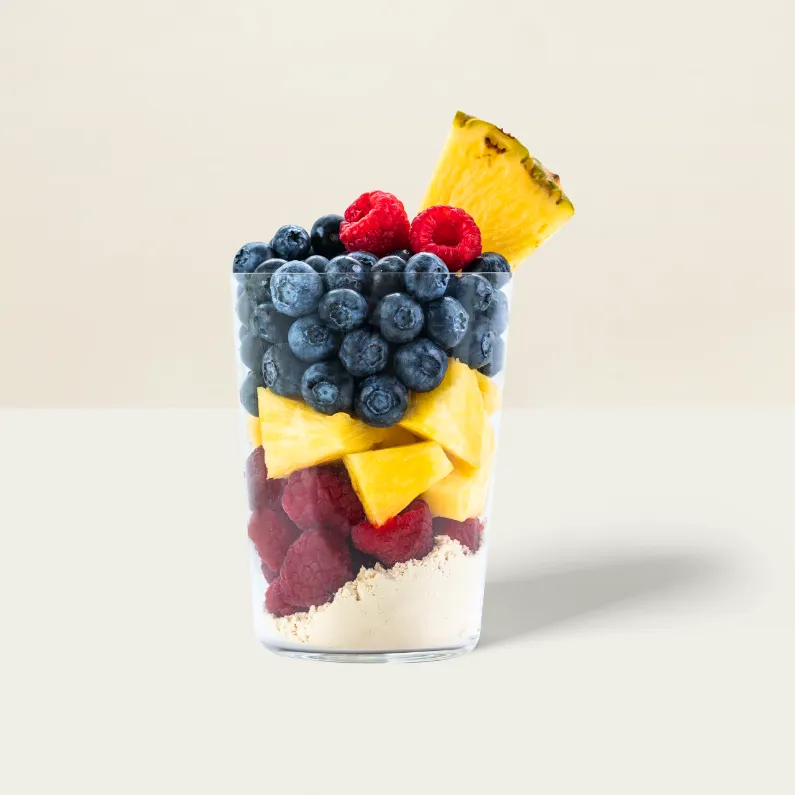
Our Blueberry & Raspberry blend, for example, currently combines five fruits with pea protein, hemp heart seeds, and açaí powder and provides 9 grams of fiber per package.
That is what we mean when we say recipe design matters.
4. Think About Texture Before You Blend
Texture is one of the easiest parts of smoothie construction to overlook.
Banana can add body. Avocado can make a blend creamier. Seeds and nuts change texture differently. The amount and type of liquid matter too.
A bag of frozen mango does not tell you how much liquid will create the texture you wanted.
For Revive cups, we maintain a smoothie liquid guide based on liquids our team has tested with individual recipes.
That is a small detail, but it is part of making a repeatable blend rather than improvising every morning.
What Should You Compare Before Buying Frozen Smoothie Packs?
Compare the ingredient list, nutrition facts, portion size, allergens, recommended liquid, preparation method, freezer requirements, and variety before choosing frozen smoothie packs.
Price matters too, but price per cup does not tell the whole story.
Compare the Complete Recipe, Not Just the Fruit
A bag of frozen berries can be inexpensive per serving.
But if your normal smoothie also requires protein powder, chia, flax, greens, nut butter, avocado, yogurt, and another fruit, those ingredients belong in the comparison too.
On the other hand, if your favourite frozen fruit smoothies contain only berries, banana, and milk, DIY may be extremely straightforward.
We do not think one answer fits every kitchen.
Check Whether You Will Actually Use the Variety
Variety has value only if you want it.
Our current menu includes more than 20 smoothie flavours across protein, wellness, low-calorie, energizing, GLP-1-friendly, seasonal, and fruit-forward categories.
That allows a box to cover different mornings instead of asking one recipe to do everything.
But we would still choose intentionally.
A box full of flavours you selected because they sounded interesting but never reach for is not a well-built smoothie routine.
Pre-Portioned Smoothies Can Change the Food-Waste Equation
One practical advantage of pre-portioned smoothies is that ingredients arrive assigned to a recipe rather than sitting in separate grocery packages waiting to be used.
Consider a smoothie containing a little avocado, spinach, chia, pineapple, and coconut.
At home, you normally buy those foods separately. If you already use all five elsewhere, excellent. If not, leftover ingredients become another meal-planning problem.
Pre-portioning changes that.
It does not make the system waste-free. Packaging and freezer space still matter. But it can reduce the half-bag-of-spinach problem that happens when one ambitious smoothie recipe meets a busy week.
What Makes Frozen Smoothie Delivery Worth Considering?
Frozen smoothie delivery is useful when the part of smoothie-making you struggle with is keeping varied ingredients prepared and available consistently.
A smoothie delivery service does not eliminate every step.
You still need freezer space. You need an appropriate blender. You add liquid. You blend. You clean the blender.
What it changes is everything upstream.
The recipes are already developed. The ingredients are already selected. The portion has already been built. The frozen cup is waiting for the morning you need it.
Before subscribing, we recommend looking beyond the introductory offer. Our guide to choosing a smoothie subscription covers ingredients, nutrition information, variety, allergens, delivery, and whether the system fits your routine.
Choose the Smoothie System You Will Actually Keep Using
At Revive Superfoods, we do not think a bag of frozen fruit is the enemy of a ready-to-blend cup.
We keep frozen fruit at home too.
The distinction is about how much work you want to do between “I should eat breakfast” and actually having something in your hand.
If you enjoy designing recipes, stocking ingredients, portioning seeds, testing ratios, and changing the blend every morning, DIY gives you enormous flexibility.
If that preparation is exactly why the smoothie never happens, ready to blend smoothies solve a different problem.
A good frozen cup should give you more than fruit in convenient packaging. It should give you a recipe that has already considered flavour, texture, ingredient variety, portioning, and purpose.
Open the freezer. Pick the cup that fits the morning. Add the liquid. Blend.
That is the difference we think earns a smoothie its freezer space.